
Table of Contents
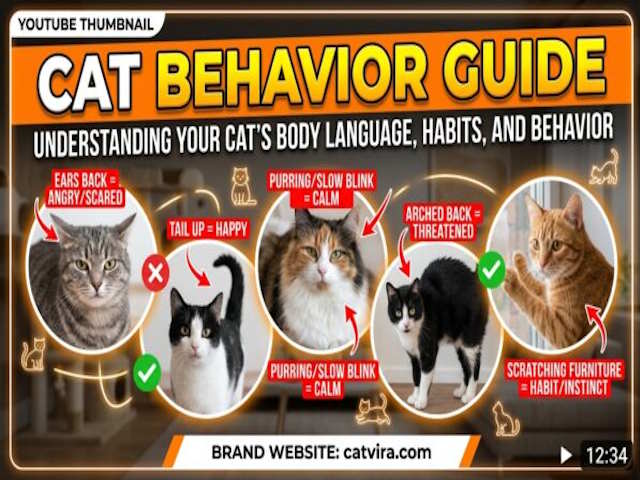
Most “problem behaviors” in cats are actually normal feline behaviors happening in a way or place their owner does not want. Understanding what your cat is communicating — through posture, sound, and habits like scratching — makes it much easier to work with their instincts instead of against them.
Understanding Cat Body Language
Cats communicate constantly through posture, ear position, and tail movement. A relaxed cat typically has a loose body, soft eyes, and a tail held naturally, while a stiff body, flattened ears, dilated pupils, or a puffed tail usually signal fear, stress, or agitation. Learning your own cat’s typical posture makes it much easier to notice when something is off.
What Different Cat Sounds Mean
Meowing is used almost exclusively to communicate with humans, not other cats, and its meaning depends heavily on context and tone. Purring most often signals contentment, though cats also sometimes purr when stressed or unwell. Chirps and trills are often friendly greetings, while growling, hissing, and yowling generally signal fear, discomfort, or a warning to back off.
Why Cats Scratch
Scratching is a completely normal behavior that helps cats shed the outer layer of their claws, stretch their muscles, and mark territory visually and with scent glands in their paws. Rather than trying to stop scratching altogether, providing an appealing, sturdy scratching post in a location your cat already frequents is usually far more effective than discouragement alone.
Why Cats Bite
Play biting, overstimulation biting, and fear-based biting all look similar but come from different causes. Kittens often nip during play because they have not yet learned bite inhibition, while adult cats may bite during petting once they have had enough — often signaled beforehand by tail flicking, skin twitching, or flattened ears that owners can learn to recognize and respond to.
Why Cats Hide
Hiding is a common, often healthy coping strategy cats use in response to stress, unfamiliar people, loud noises, or new environments. Occasional hiding is normal, especially after a change like moving or a new pet; however, hiding that is unusually persistent, combined with appetite loss or other symptoms, is worth mentioning to a veterinarian since it can occasionally point to illness.
Litter Box Problems
Urinating or defecating outside the litter box is rarely about “spite” — it is almost always a signal of a medical issue, a litter box the cat finds unappealing, or a stress-related cause. A veterinary check is a sensible first step for any sudden litter box avoidance, since some medical causes (particularly urinary issues) require prompt attention.
Aggression
Aggression in cats can stem from fear, redirected frustration (reacting to something they can’t reach, like an animal outside a window), territorial disputes with other cats, or pain. Identifying the trigger is usually more productive than punishing the behavior itself, and persistent aggression is a good reason to consult a vet or a certified feline behaviorist.
Separation and Stress
While often thought of as independent, many cats do experience stress related to changes in routine, environment, or the loss of a companion. Signs can include changes in appetite, increased vocalization, or altered litter box habits. Keeping routines consistent and providing enrichment can help ease transitions.
Introducing Cats
New cat introductions generally go best when done gradually: separate spaces at first, scent swapping, then supervised visual contact before allowing free interaction, often over one to several weeks depending on the cats involved. Rushing introductions is one of the most common causes of long-term tension between cats in the same household.
How to Encourage Positive Behavior
Reward-based approaches — treats, play, and praise for desired behavior — tend to work far better with cats than punishment, which often increases fear or anxiety without addressing the underlying cause. Consistency, appropriate outlets (like scratching posts and play), and patience are usually the most effective long-term tools.
When Professional Help May Be Needed
Sudden, severe, or persistent behavior changes — especially aggression, house-soiling, or extreme anxiety — are worth discussing with a veterinarian first to rule out a medical cause, and a certified feline behaviorist can help with more complex behavioral cases once medical causes are excluded.
FAQ
Why does my cat knock things off tables?
This is often a mix of curiosity, play, and attention-seeking behavior rather than defiance — redirecting that energy toward appropriate play can help.
Is it normal for a new cat to hide for days?
Some hiding during adjustment to a new home is common, but persistent hiding combined with not eating or drinking should be checked by a veterinarian.
How do I stop my cat from scratching furniture?
Provide a sturdy, appealing scratching post near the furniture they currently use, and consider double-sided tape or a deterrent on the furniture itself while they transition.
This guide is for general information only and is not a substitute for professional veterinary advice.

catvira
Related Product Recommendations

Automatic Cat Feeder
A programmable feeder that dispenses set portions on a schedule, helpful for owners who are away during normal mealtimes.
- Programmable feeding schedule
- Portion control settings
- Large food capacity hopper
- + Helps maintain a consistent feeding routine
- + Useful for owners with irregular schedules
- − Requires initial setup and occasional cleaning
- − Battery or power backup recommended

Stainless Steel Cat Water Fountain
A circulating water fountain designed to encourage cats to drink more, using flowing water rather than a static bowl.
- Continuous water circulation
- Stainless steel construction
- Replaceable filters
- + May encourage cats to drink more water
- + Easier to keep clean than some plastic fountains
- − Requires regular filter changes
- − Needs access to a power outlet
Interactive Cat Toy
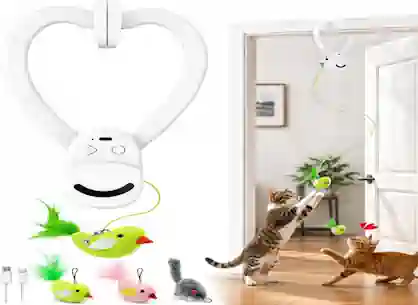
A motion-based toy intended to encourage natural play behaviors like stalking, chasing, and pouncing for indoor cats.
- Automatic or motion-activated movement
- Multiple play modes
- Rechargeable or battery powered
- + Supports physical activity and mental stimulation
- + Can be used during work hours when supervision is limited
- − Some cats lose interest over time
- − Not a full substitute for interactive play with an owner

Self-Cleaning Litter Box
An automated litter box that rakes or sifts waste on a schedule or after use, reducing daily manual scooping.
- Automatic waste removal cycle
- Odor-control waste compartment
- Safety sensors
- + Reduces daily scooping workload
- + Can help manage odor between full cleanings
- − Higher upfront cost than a standard litter box
- − Still requires periodic manual cleaning and maintenance
Related Articles

8 Must-Have Cat Products (Tested & Reviewed)
8 Must-Have Cat Products (Tested & Reviewed) If you only buy eight things for your cat…

Tuft + Paw Furniture Review: Are These Modern Cat Trees and Bowls Worth the Investment?
Are These Modern Cat Trees and Bowls Worth the Investment? Finding high-quality gear that complements your…
Top Automatic Litter Solutions For Clean Homes
This paragraph serves as an introduction to your blog post. Begin by discussing the primary theme…